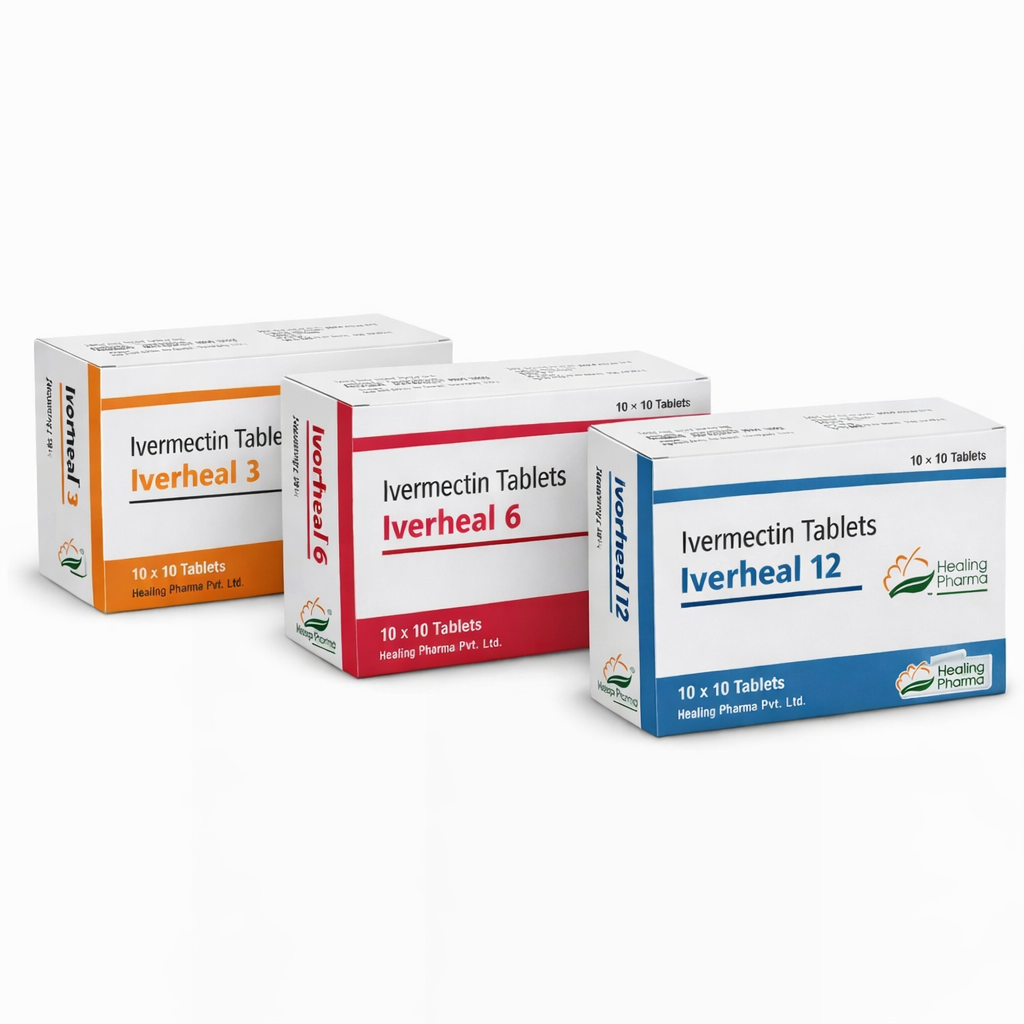
| Active Ingredient | Ivermectin |
| Brand/Strength | 3 mg, 6 mg, 12mg |
| Drug Class | Antiparasitic |
| Manufacturer | Healing Pharma |
| Delivery Time | Estimated 10 to 12 days |
One of the medications commonly used to treat parasitic infections is Iverheal. This medicine contains Ivermectin, a compound that has been widely used in modern medicine for decades. Doctors prescribe ivermectin-based medicines to help eliminate parasites from the body and stop the infection from spreading further.
Iverheal tablets are used for the treatment of several parasitic diseases that affect different organs of the body. When taken according to medical advice, the medication can help control infections and improve the patient’s overall health.
This article provides a detailed overview of Iverheal tablets, including their medical uses, working mechanism, dosage information, safety precautions, and frequently asked questions.
What Is Iverheal?
Iverheal is an antiparasitic medication used to treat infections caused by parasites. The active ingredient present in this medicine is Ivermectin, which belongs to a group of drugs designed specifically to target parasitic organisms.
Parasites depend on a host for survival. Once they enter the body, they may affect different tissues and organs. In humans, parasitic infections can occur in the digestive tract, skin, eyes, or bloodstream.
Iverheal tablets help eliminate these parasites by interfering with their nerve and muscle functions. When the medication affects these functions, parasites lose their ability to move or reproduce and eventually die.
The body’s immune system then removes the dead parasites naturally.
Iverheal is available in several dosage strengths, including:
The appropriate dosage depends on factors such as the patient’s body weight, type of infection, and medical condition.
Why Doctors Prescribe Iverheal
Healthcare providers prescribe Iverheal tablets to treat a variety of parasitic infections. These infections may affect different systems within the body and may lead to uncomfortable symptoms if left untreated.
Some of the most common conditions treated with ivermectin-based medications include intestinal parasite infections, skin infestations, and certain parasitic eye diseases.
Treating these infections early helps prevent complications and improves recovery time.
Types of Parasitic Infections Treated with Iverheal
Intestinal Worm Infections
The digestive system is one of the most common areas where parasites can develop. Intestinal worms may enter the body through contaminated food, water, or soil.
These infections may cause symptoms such as:
- abdominal pain
- diarrhea
- nausea
- fatigue
- weight loss
One example of such an infection is Strongyloidiasis, which is caused by the parasite Strongyloides stercoralis. This parasite infects the intestines and may remain in the body for long periods if untreated.
Another example is Ascariasis, caused by roundworms that infect the digestive tract.
Iverheal tablets may help eliminate these parasites and restore digestive health.
Skin Parasite Infestations
Certain parasites attack the skin rather than internal organs. These parasites may cause severe itching, irritation, or skin lesions.
One well-known example is scabies, a condition caused by microscopic mites that burrow under the skin. The infection leads to intense itching and red skin bumps.
Doctors sometimes prescribe ivermectin tablets for scabies when topical treatments are not effective.
Another condition known as cutaneous larva migrans occurs when hookworm larvae penetrate the skin and move beneath the surface. This infection can cause red, winding skin lesions accompanied by itching.
Iverheal tablets may help eliminate these parasites.
Eye-Related Parasitic Disease
Some parasitic infections affect the eyes and surrounding tissues. One example is Onchocerciasis, commonly known as river blindness.
This disease is caused by a parasitic worm transmitted through insect bites. The infection may cause skin irritation and can lead to vision problems if untreated.
Ivermectin-based medicines are widely used in programs designed to control this disease.
How Iverheal Works
Understanding how ivermectin works can help explain why the medicine is effective against parasites.
Parasites rely on specific nerve signals to control their movement and survival. These nerve signals are regulated by special channels present in their nerve and muscle cells.
Ivermectin binds to these channels and increases the movement of chloride ions into the parasite’s cells.
This process leads to several effects:
- paralysis of the parasite
- inability to move or feed
- inability to reproduce
Eventually, the parasite dies, and the body removes it through natural immune processes.
One of the advantages of ivermectin is that it primarily affects parasites and has minimal impact on human nerve cells when taken at recommended doses.
Recommended Dosage of Iverheal
The dosage of Iverheal tablets varies depending on several factors.
Doctors typically consider the following when prescribing ivermectin:
- body weight
- type of parasitic infection
- age of the patient
- medical history
- severity of symptoms
In many cases, ivermectin is taken as a single oral dose. Some infections may require additional doses after a specific period.
Patients should always follow their doctor’s instructions regarding dosage and treatment duration.
Taking more medication than prescribed does not improve treatment results and may increase the risk of side effects.
How to Take Iverheal Tablets
To ensure the medication works effectively, it should be taken correctly.
General guidelines include:
- take the tablet with a full glass of water
- consume the medicine on an empty stomach
- swallow the tablet whole without crushing or chewing
Taking the medicine on an empty stomach helps improve its absorption in the body.
Patients should also avoid skipping doses or stopping treatment without medical advice.
Possible Side Effects
Like most medications, Iverheal tablets may cause side effects in some individuals. However, many people tolerate the medicine well.
Common side effects may include:
- headache
- dizziness
- nausea
- fatigue
- muscle pain
- mild skin rash
These side effects are generally mild and temporary.
Serious reactions are rare but require immediate medical attention.
Signs of Overdose
Taking too much ivermectin may lead to serious complications.
Possible symptoms of overdose include:
- severe dizziness
- confusion
- tremors
- vomiting
- abdominal pain
- difficulty with coordination
Anyone experiencing these symptoms after taking ivermectin should seek emergency medical assistance.
Important Precautions
Before taking Iverheal tablets, patients should consider certain precautions.
Pregnancy
Pregnant women should consult a doctor before taking ivermectin because some studies suggest potential risks during pregnancy.
Breastfeeding
Small amounts of ivermectin may pass into breast milk. Nursing mothers should consult a healthcare professional before using the medication.
Liver Conditions
People with liver disease should inform their doctor before starting treatment, since the liver helps process the medication.
Alcohol Consumption
Avoiding alcohol while taking ivermectin is generally recommended because alcohol may increase side effects such as dizziness.
Drug Interactions
Certain medications may interact with ivermectin and affect how it works in the body.
Patients should inform their healthcare provider if they are taking:
- prescription medications
- over-the-counter drugs
- herbal supplements
- vitamins
Providing complete medical information helps doctors choose the safest treatment plan.
Preventing Parasitic Infections
Preventive measures play an important role in reducing the risk of parasitic infections.
Some useful habits include:
- washing hands regularly
- drinking clean water
- cooking food properly
- maintaining good personal hygiene
- avoiding contaminated soil or water
These practices can significantly reduce the chances of infection.
Conclusion
Iverheal is an antiparasitic medication used to treat several infections caused by parasites affecting the digestive system, skin, and eyes. The active ingredient Ivermectin works by disrupting the parasite’s nervous system, eventually eliminating it from the body.
When taken correctly under medical supervision, the medication can help control parasitic infections and improve patient health.
However, proper diagnosis, correct dosage, and responsible use of medication are essential for effective treatment.
Maintaining good hygiene and seeking medical advice when symptoms appear are also important steps in preventing parasitic infections.
FAQ
What is Iverheal used for?
Iverheal is used to treat parasitic infections such as strongyloidiasis, scabies, and river blindness.
What does Iverheal contain?
Iverheal contains ivermectin, an antiparasitic medicine that targets parasites in the body.
How long does ivermectin take to work?
Ivermectin begins working within hours, but noticeable symptom improvement may take several days.
Is ivermectin an antibiotic?
No, ivermectin is not an antibiotic; it is an antiparasitic medication.
Can ivermectin treat bacterial infections?
No, ivermectin only works against parasites and does not treat bacterial infections.
How should ivermectin tablets be taken?
Ivermectin tablets are usually taken as a single dose with water on an empty stomach.
What are the common side effects of ivermectin?
Common side effects include headache, dizziness, nausea, and mild skin rash.
Can ivermectin be taken daily?
No, ivermectin is usually taken as a single dose or short treatment course depending on the infection.
Who should avoid ivermectin?
Pregnant women, people with certain medical conditions, or those allergic to ivermectin should consult a doctor before taking it.
Do you need a prescription for ivermectin?
In many countries, ivermectin tablets require a doctor’s prescription.
Goodrxusa, iverheal, Vidalistausa, cenforces, cenforceshop, Cenforce California, Cenforce us, Cenforce 200, Vidalista 20, Vidalista Tab, Modafinil USA, Fenbendazole USA, Iverheal USA